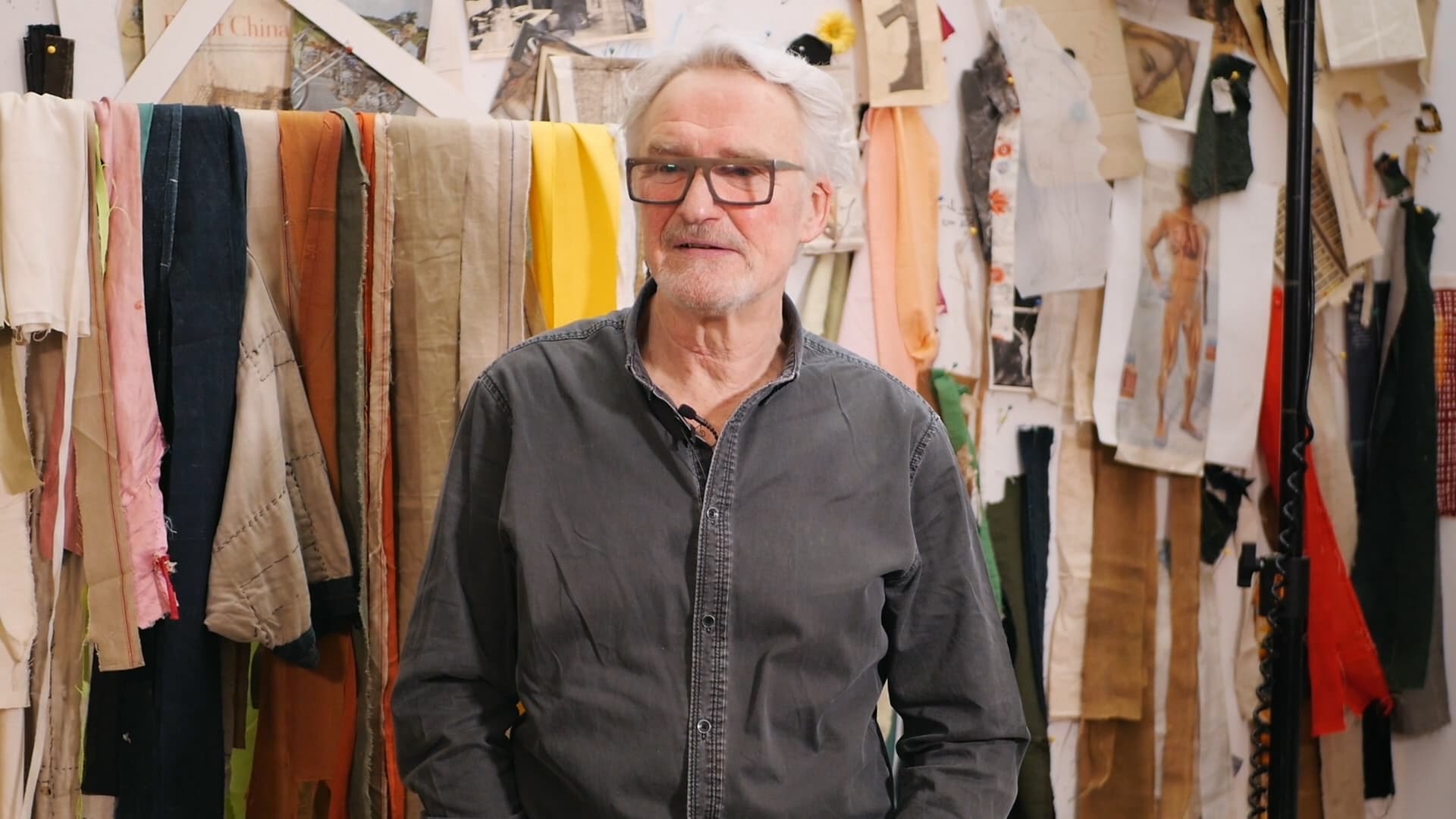
Uli Fischer
About the Artist
Textiles are utilized as ceremonial and commercial artifacts, both as sublime and everyday objects. As cultural symbols they contain legends, good luck signs, social relations and entail the structure of a world. They are used and, at a certain point, worn down. Berlin based artist Uli Fischer brings this aesthetic and materiality into the image. Since the early 1990s, he has repeatedly travelled to Asia where he bore witness to the ritual and social backgrounds of traditional materials. Having left his tex- tile design years behind him, he concentrated on color field painting and also worked as a scenographer. Ultimately, in 2008, he made the patina and the traces of use of historic textiles into both the medium and material of his art. From this point on, he developed a visual language using these traditional textiles: fabrics both mundane and ritual. The language he developed preserves and transforms the traces inscribed on the surface of these textiles. Fischer seeks out, discovers, touches and collects fabrics from all over the world, whether they are fragments of indigo- colored futon material from Japan, or nineteenth-century French sackcloth. He separates them, then sews them together, stores them, reduces and adds to them, using all of his strength to stick them to the body of the picture. In doing so, he also recovers tactile experience of the materials’ properties: colors, tones, volume, space, and movement. Abstract compositions are created, reminiscent of his former work as a painter, but also of the work of Paul Klee, who frequently used rough jute as a textile medium for his paintings, investigating the reciprocal relationship between paint and textures.